Searching for a reliable fabricator near you? This guide gives you the exact questions to ask before you commit, covering quality, certifications, lead times, capabilities, and what separates good fabricators from great ones.
Choosing the right fabricator is one of the most important decisions in any manufacturing, construction, or fit-out project.
Get it right and you get consistent quality, accurate lead times, and a supplier who genuinely supports your project. Get it wrong and you face rework costs, delays, and parts that simply do not perform as expected.
The good news is that asking the right questions upfront makes the decision much clearer. This guide gives you exactly what to ask when you are searching for a reliable fabricator near you, so you commit with confidence rather than guesswork.
Why Choosing a Local Fabricator Matters
Before diving into the questions, it is worth understanding why working with a fabricator near you offers real advantages over distant or overseas alternatives.
Local fabricators offer faster turnaround, direct communication, and the ability to visit the workshop before you place an order. When something needs adjusting, you can have a straightforward conversation the same day rather than chasing emails across time zones.
Furthermore, a local fabricator invests in the same business community you operate in. That shared interest creates a different kind of working relationship, one built on reputation and repeat business rather than one-off transactions.
Question 1: Are You ISO 9001 Certified?
This is the single most important question to ask any fabricator near you.
ISO 9001 ensures a strong quality management system and continuous improvement. A fabricator holding this certification operates documented, controlled procedures at every stage of production. Non-conformances go through a formal resolution process. Audits happen regularly to verify the system is working.
Without ISO 9001, you are relying entirely on a supplier’s goodwill rather than a proven framework. That is a significant risk when your project depends on consistent quality.
Ask to see the certificate and check it is current. A credible fabricator will share this immediately and without hesitation.
Ashland Engineering holds full ISO 9001 certification to the latest standard. Their Quality Management System covers every stage of production, from engineering design through to finished part delivery.
Question 2: What Capabilities Do You Have In-House?
Not all fabricators offer the same range of services. Consequently, it is essential to understand what a fabricator can do under their own roof before you commit.
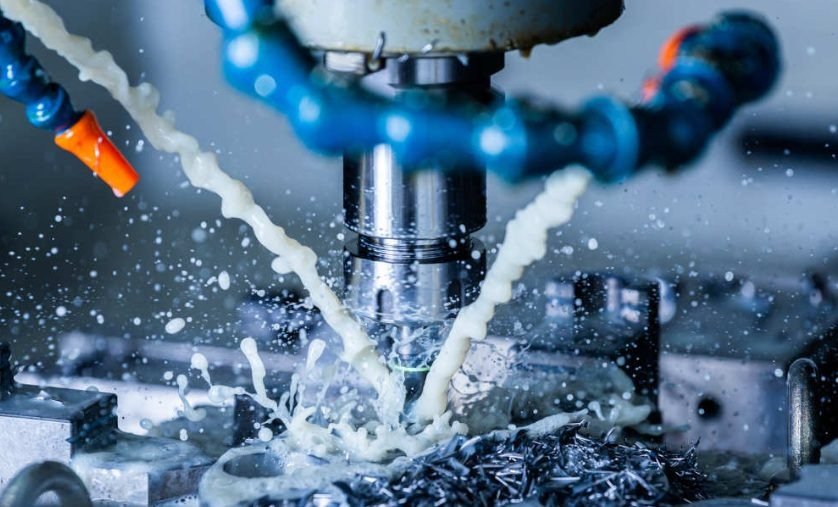
Key capabilities may include laser cutting, CNC machining, bending, welding, and powder coating. If your project requires a specific process, confirm that they have the right equipment and skilled staff to handle it efficiently. Find The Needle
A fabricator with broad in-house capability delivers two important advantages. First, your job stays under one quality system throughout. Second, you avoid the delays and cost premiums that come with a fabricator who subcontracts specialist work elsewhere.
Ask specifically about the following:
Cutting: Do they offer laser cutting, profile cutting, and sawing? What material thicknesses can they cut?
Forming: Do they have a CNC press brake for accurate bending and folding?
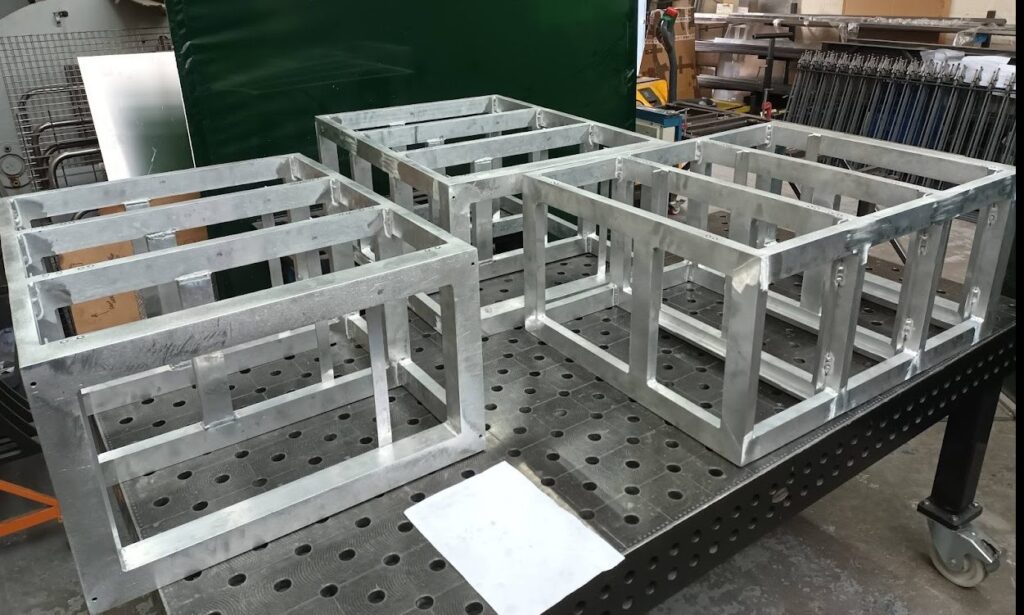
Welding: Can they MIG weld and TIG weld? Do they weld mild steel, stainless steel, and aluminium?
Machining: Do they have CNC lathes and milling machines for precision turned and machined components?
Finishing: Do they offer powder coating, hot-dip galvanising, anodising, and electro-plating?
Design: Do they have in-house CAD/CAM capability to support design review before production starts?
Ashland Engineering offers all of these capabilities under one roof in Milton Keynes. Their dedicated CNC machine shop, fabrication floor, and finishing options mean your project never leaves their quality system from first cut to final delivery.
Question 3: How Do You Manage Quality During Production?
ISO 9001 certification tells you a quality system exists. However, you also need to understand how that system operates in practice on your specific job.
Ask about their inspection procedures at various stages of fabrication. A reliable fabricator checks parts during production, not just at the end. This approach catches problems early, before they affect subsequent operations or the finished assembly.
Additionally, ask whether they use calibrated measuring equipment. Ashland Engineering uses calibrated digital metrology tools to verify critical dimensions at key stages of production. This gives customers confidence that every part meets the drawing specification before it ships.
Also ask what documentation they provide. A good supplier should conduct regular tests and provide reports for each batch. Common quality checks ensure that parts meet industry standards for strength, durability, and performance. Ask if they can provide mill test reports or inspection certificates with each order.
Question 4: What Are Your Typical Lead Times?
In any project, timing is critical. Lead time is the amount of time it takes for the supplier to prepare and deliver your order.
Ask about standard lead times for the type of job you need. Ask separately about urgent jobs, because a fabricator who can accommodate rush work when needed is a genuinely valuable partner.
Just because your order will only take the factory a week to manufacture does not mean it will be ready a week after you place the order. A good factory plans production weeks in advance to keep their workforce busy. You need to allow for this in your own project planning.
A reliable fabricator near you will give you honest lead time information rather than optimistic promises. They will also tell you promptly if anything changes rather than leaving you to find out at the last minute.
Question 5: Can You Work From My Drawings and Files?
Every fabricator accepts finished engineering drawings. However, the best local fabricators go further than this.
Ask whether they can work from STEP files, DXF files, PDF drawings, or even hand-drawn sketches. Ask whether they review designs for manufacturability before quoting, which helps you catch problems before material is cut rather than after.
Furthermore, ask whether they can support your design if you do not have finished drawings. Fabricators with in-house CAD/CAM capability, like Ashland Engineering, can take a concept or sketch and develop it into a production-ready digital model. This is particularly valuable for small businesses and product developers without their own engineering resource.
Question 6: What Materials Do You Work With?
Not all metal fabricators work with the same materials or processes. Make sure the fabricator specialises in the materials your project requires, such as stainless steel, aluminium, or mild steel. Each metal demands different handling and fabrication techniques, affecting cost, lead time, and quality.
Ask specifically about the grades they work with and whether they can supply material certificates confirming the exact specification of the metal used in your parts. This matters for compliance, traceability, and any customer or regulatory requirements you need to satisfy.
Question 7: Can You Scale From Prototype to Batch Production?
Your requirements will almost certainly change over time. You may start with a one-off prototype, move to a small initial batch, and eventually need regular scheduled deliveries.
Ask whether the fabricator can follow that journey with you. A reliable fabricator near you handles all three stages under the same quality system without handing you off to different teams or different suppliers as your volume grows.
Whether you need a single prototype or large batch production, the service should be able to meet your demands and be flexible with lead times.
Ashland Engineering regularly manages exactly this transition for OEM and commercial customers. Their ISO 9001 system applies equally to a one-off job and a high-volume production run.
Question 8: What Happens If I Am Not Satisfied?
This question reveals a great deal about a fabricator’s confidence in their own work.
Ask what happens if you are not fully satisfied with their work. A credible fabricator is proud of the work they produce and stands behind their quality control programme.
A confident, reputable fabricator will answer this question directly. They will explain their non-conformance process, their rework policy, and how they handle customer concerns. A vague or evasive answer is a warning sign worth taking seriously.
Question 9: Can I Visit Your Workshop?
Visiting a fabricator’s workshop before you place a significant order is one of the most reliable ways to assess their capability and culture.
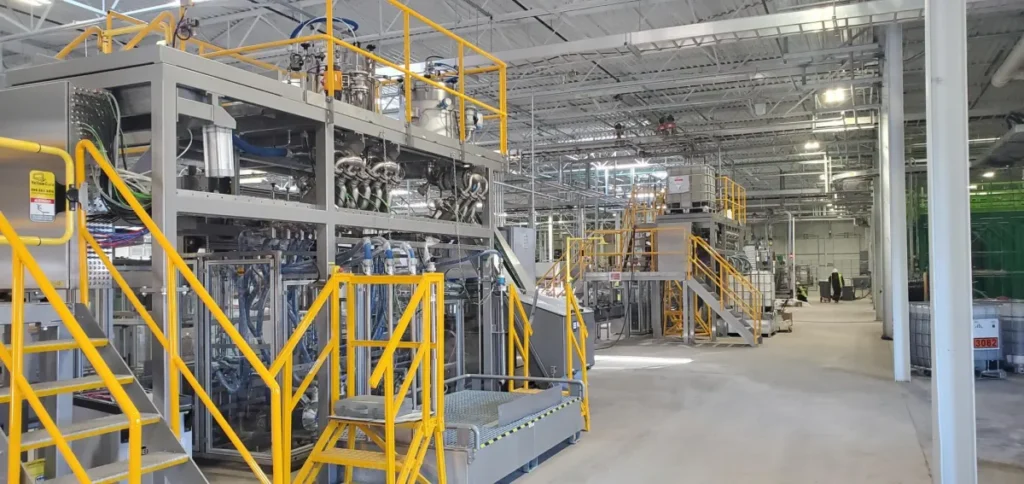
You can see the equipment for yourself, assess how the shop floor is organised, and meet the people who will actually make your parts. A fabricator who welcomes visits demonstrates genuine confidence in their operation.
Ashland Engineering’s workshop is based in Milton Keynes. They serve customers across the UK and welcome prospective customers to discuss projects in person.
Finding the Right Fabricator Near You
Searching for a local fabricator near you is straightforward. Finding one who combines the right capabilities, the right quality system, and the right attitude to customer service takes a little more effort.
Ask all nine questions above before you commit. A reliable fabricator will answer every one of them clearly, honestly, and without hesitation. If the answers feel vague, evasive, or overconfident without evidence, keep looking.
Ashland Engineering answers all of these questions directly. Based in Milton Keynes and serving customers across the UK, they combine ISO 9001 certification, full in-house fabrication and CNC machining capability, and a genuine commitment to customer service.
Get in Touch With a Fabricator You Can Trust
Whether you need steel fabrication, CNC machining, sheet metal work, MIG or TIG welding, or a complete design-and-make service, Ashland Engineering delivers.
Contact the team today at sales@ashlandengineering.co.uk or call 01908 382 599 to discuss your project and get a competitive, detailed quote.