Trying to decide between bespoke metal work and standard off-the-shelf products? This guide breaks down the key differences, costs, and when custom fabrication is the smarter choice for your project.
When you need a metal component, a frame, a bracket, or a structural assembly, you have two broad options. You can buy something standard from a catalogue, or you can have it made to your exact specification. Both options have their place. But choosing the wrong one costs you money, time, or both.
This guide explains the real differences between bespoke metal work and off-the-shelf products, and helps you decide which approach suits your project.
What Is Bespoke Metal Work?
Bespoke metal work is fabrication carried out to a specific customer requirement. The design, dimensions, material, and finish are all chosen to match a particular application. Nothing comes from a standard catalogue. Every part is made from scratch to your specification.
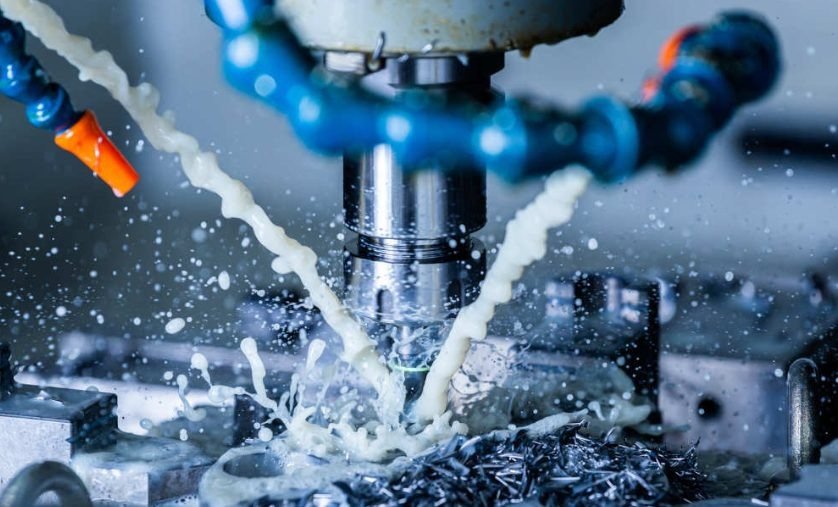
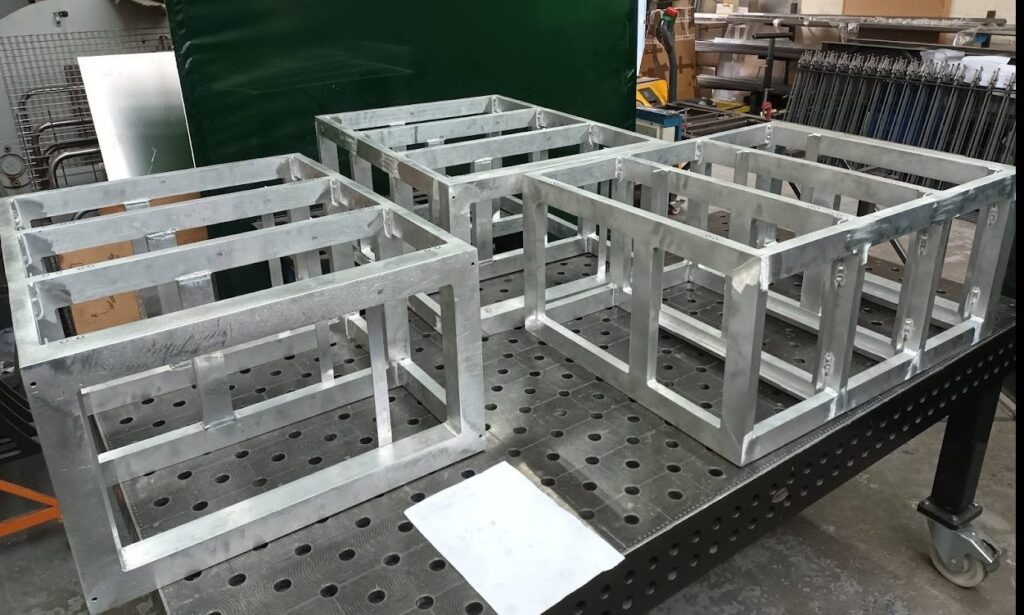
Bespoke metal work covers a wide range of products and processes. It includes laser cut sheet metal components, press brake formed enclosures and panels, welded structural assemblies, CNC machined parts, gates, railings, brackets, frames, and much more.
The defining characteristic is that the finished part exists because you needed it, not because a manufacturer decided to stock it.
What Are Off-the-Shelf Metal Products?
Off-the-shelf products are standardised items manufactured in volume and held in stock for immediate supply. Angle iron, box section, standard brackets, cable trays, and proprietary enclosures all fall into this category.
The advantage is speed and cost. Standard products are cheaper to buy because the manufacturing cost is spread across a large production run. They are also available quickly, often next day.
The disadvantage is that standard products are designed for the average application, not your specific one. They may be close to what you need, but they are rarely exactly right.
The Key Differences Between Bespoke and Standard
Fit and Function
This is where bespoke metal work wins most clearly. A standard bracket comes in fixed sizes, fixed hole patterns, and fixed load ratings. If your application needs a bracket that is 47mm longer than the nearest standard size, or has a hole pattern to match a non-standard bolt layout, a standard product simply will not work.
Bespoke fabrication gives you a part that fits the first time. There is no compromising on dimensions, no modifying a standard product to make it work, and no accepting a suboptimal solution because nothing in the catalogue is quite right.
Material and Grade Choice
Off-the-shelf products are made from a fixed material, usually mild steel or a standard aluminium alloy. You take what the manufacturer chose.
With bespoke metal work, you specify the material yourself. If your application needs 316 stainless steel for corrosion resistance, 5083 aluminium for marine use, or mild steel with a specific surface treatment, you can have exactly that. The material suits the environment and the application rather than the other way around.
Surface Finish
Standard products typically come in a limited range of finishes. Raw steel, hot-dip galvanised, or perhaps a standard powder coat colour. Your colour options are restricted, and specialist finishes like anodising or electroplating are rarely available on stock items.
Bespoke metal work gives you full control over the surface finish. You choose the coating, the colour, the texture, and the specification. For products going into visible environments, such as retail fixtures, architectural features, or branded installations, this matters a great deal.
Quantity Flexibility
Off-the-shelf products work well when you need standard quantities. But if you need one specific component, or five, or twelve, stock products may force you into buying more than you need.
Bespoke metal work can be ordered in any quantity, from a single prototype to a production batch. A good fabricator will price accordingly, and while unit costs are higher on small runs, you are only paying for exactly what you need.
When Off-the-Shelf Makes More Sense
Standard products are the right choice in several situations.
If your application genuinely fits a standard component, buying from stock is faster and cheaper. There is no design time, no tooling, and no lead time for fabrication. For structural steelwork using standard sections, general-purpose enclosures in standard sizes, or common fixing and support hardware, off-the-shelf products do the job well.
Standard products also work well when volume is high and a catalogue product genuinely meets your specification. Forcing a bespoke solution where a standard one works adds cost without adding value.
The honest answer is that off-the-shelf products are the right starting point. Bespoke metal work is the right answer when standard products fall short.
When Bespoke Metal Work Is the Better Choice
Your Application Has Specific Dimensional Requirements
If the part needs to fit a particular space, match an existing assembly, or interface with non-standard components, a bespoke solution is almost always necessary. Trying to adapt a standard product to fit a non-standard application usually costs more in time and effort than ordering the correct part in the first place.
Appearance Matters
For customer-facing installations, retail environments, architectural metalwork, or any application where the finished product will be seen and judged, bespoke metal work gives you control over every visual detail. Standard products are designed for function, not aesthetics.
You Need a Specific Material or Performance Standard
Food-grade fabrications, marine environments, high-temperature applications, and safety-critical structural components all have material requirements that standard catalogue products may not meet. Bespoke fabrication lets you specify the exact material and any required certification or testing.
You Are Building a Product
If you are an OEM or a manufacturer incorporating metal components into a product you sell, bespoke fabrication is almost always necessary. Your product has unique geometry, unique requirements, and a brand identity that standard components cannot support.
The Cost Question
Bespoke metal work costs more per unit than an equivalent off-the-shelf product. That is almost always true. But the comparison is rarely straightforward.
The relevant question is not whether bespoke costs more than standard. The question is whether the total cost of using a standard product, including any modification, adaptation, poor fit, or performance compromise, is actually lower than commissioning the right part from the start.
In many cases, it is not.
Working with Ashland Engineering on Bespoke Metal Work
At Ashland Engineering in Milton Keynes, the team handles bespoke metal work projects for customers across Buckinghamshire, Northamptonshire, Bedfordshire, and the wider UK. From single prototypes to batch production runs, every project is fabricated to the customer’s exact specification.
Ashland Engineering holds ISO 9001 certification. Laser cutting, press brake forming, MIG and TIG welding, CNC machining, and a range of surface finishing options are all available in-house. Whether you need a one-off structural component or a recurring supply of custom parts, the same quality framework applies.
To discuss your bespoke metal work requirements, contact the team at sales@ashlandengineering.co.uk or call 01908 382 599.