Steel fabrication and CNC machining are often treated as separate services. This guide explains how combining both under one roof delivers better quality, tighter tolerances, and faster turnaround for complex industrial parts.
When buyers search for manufacturing support, they often look for one thing at a time. Steel fabrication for a frame. CNC machining for a shaft or housing. Finishing for the surface.
The problem is that many real-world industrial parts need all three. A fabricated steel structure with precision machined mounting points. A welded assembly with bored holes to tight tolerances. A custom frame where fabrication creates the structure and machining creates the interfaces that connect it to the rest of the product.
When these processes happen in separate facilities, across different suppliers, the results are inconsistent. Datums shift. Tolerances drift. Assembly problems show up on site rather than on the shop floor. And the customer spends time managing hand-offs between suppliers rather than getting on with their project.
This post explains how steel fabrication and CNC machining complement each other, what types of parts need both, and why keeping both disciplines under one ISO 9001 certified roof makes a measurable difference to quality and lead time.
Why Steel Fabrication and CNC Machining Are Often Treated Separately
Steel fabrication and CNC machining use fundamentally different equipment, skill sets, and tolerancing approaches. That is why many companies historically specialised in one or the other.
A fabrication shop excels at cutting, forming, and welding steel into structural shapes. Tolerances in fabrication work are measured in tenths of a millimetre at best, and the processes involve significant heat input, mechanical force, and assembly of multiple components into a single structure.
A machine shop excels at removing material from a workpiece with precision cutting tools, holding tolerances down to ±0.01mm, and creating features like bored holes, threaded inserts, and precision faces that a fabrication process cannot produce reliably.
The challenge arises when a part needs both. A fabricated steel chassis with machined mounting interfaces. A welded enclosure with a precision-bored port. A structural frame with machined feet that must sit perfectly flat on a reference surface.
Combining fabrication and precision machining within a single controlled process delivers welded and machined assemblies where structural strength and dimensional accuracy must work together. By managing distortion, datums, and machining allowances from the outset, components fit, seal, and perform as intended.
The Problem With Using Two Separate Suppliers
Many buyers solve this by using a fabricator for the structural work and a machinist for the precision features. On paper, this seems logical. In practice, it introduces a range of problems that erode both quality and lead time.
The first problem is datum transfer. When a fabricated assembly moves from a fabrication shop to a machine shop, the machinist must establish their own reference datums on a structure that was designed by someone else. If those datums do not align precisely with the fabricator’s intent, the machined features end up in the wrong location relative to the rest of the assembly.
The second problem is distortion. Steel fabrication introduces heat through welding, which causes the structure to distort as it cools. A separate machinist receives the distorted assembly and machines to it as-received, without knowing what the design intent was before distortion occurred. The result can be machined features that are dimensionally accurate relative to the distorted structure but wrong relative to the mating assembly.
The third problem is responsibility. When a combined fabrication and machined assembly fails inspection, both suppliers will point to the other’s work as the cause. Resolving this takes time, erodes trust, and rarely results in a fast solution.
A single-source approach reduces risk, simplifies coordination, and supports complex programmes across industrial sectors.
What Combined Steel Fabrication and CNC Machining Actually Looks Like
When both processes sit under one roof, the project is planned as a single integrated manufacturing programme rather than two separate jobs bolted together.
Stage 1: Integrated Design Review
The engineering design team reviews the full assembly, considering fabrication requirements and machining requirements simultaneously. They plan weld joint locations to avoid introducing distortion into areas that will later be machined. They add machining allowances to fabricated features that need to be brought to a precise dimension after welding. And they establish a common datum scheme that the fabricator and machinist both work to throughout.
This design integration is the single most important factor in producing a fabricated and machined assembly that works first time. It cannot happen effectively when design, fabrication, and machining are spread across three different organisations.
At Ashland Engineering, in-house CAD/CAM capability means the same digital model drives both the fabrication cutting and forming programmes and the CNC machining tool paths. The datum scheme is defined once and applied consistently across every process stage.
Stage 2: Steel Fabrication
The fabrication sequence begins with laser cutting flat patterns and profiles directly from the approved CAD model. Laser cutting holds positional accuracy to around ±0.1mm, which gives the downstream assembly tight control over the position of features relative to one another before forming and welding begin.
CNC press brake forming brings the flat parts into their three-dimensional shapes. Bend angles and flange lengths derive directly from the CAD model, so the formed parts fit together as designed without hand fitting or adjustment.
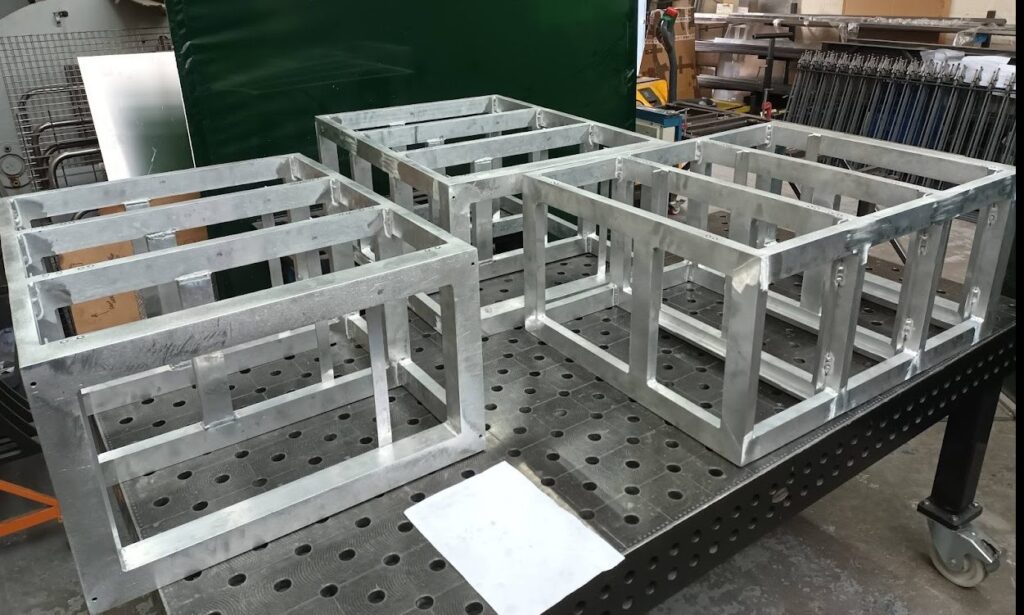
Welding assembly follows a planned sequence designed to manage distortion. Jigs and fixtures hold components in position while welds are made and allowed to cool. The weld sequence distributes heat symmetrically where possible, reducing the net distortion that accumulates across the structure.
After welding, the assembly is checked dimensionally against the key datum features that will be used in the machining stage. If any features have moved beyond an agreed tolerance, they are corrected before the assembly moves to the machine shop.
Stage 3: CNC Machining
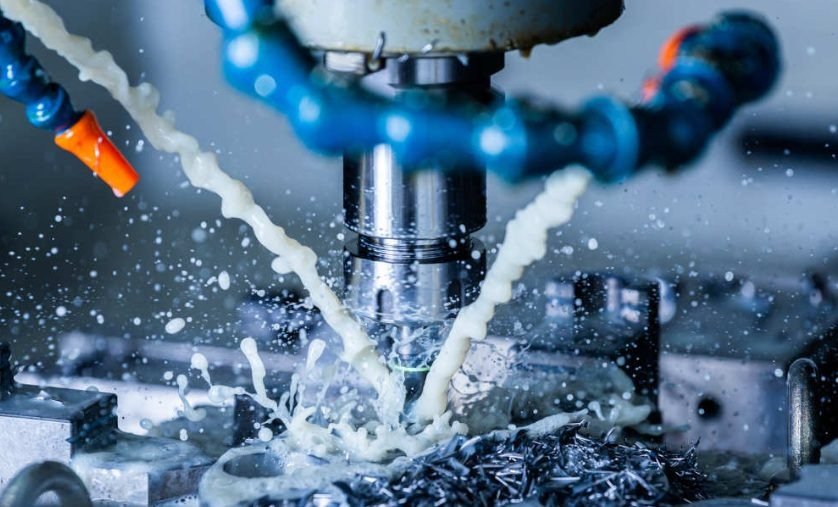
With the fabricated structure dimensionally verified, it moves into Ashland’s dedicated CNC machine shop. The XYZ Vertical Machining Centre and CNC lathe bring precision to the features that steel fabrication alone cannot achieve.
Precision boring of hole features to location tolerances of ±0.05mm or better. Facing of mounting surfaces to flatness tolerances that ensure the assembly sits correctly on its mating structure. Threading of inserts to exact pitch and depth specifications. Counterboring and countersinking for fastener clearances and flush-fit requirements.
CNC machining delivers unmatched accuracy with tolerances down to microns, ensuring parts fit perfectly. Every unit matches the original design, which is vital for production runs and assemblies requiring consistent fit.
The machining programme derives directly from the same CAD model that drove the fabrication stage. Consequently, the machined features sit exactly where the design specified them relative to the fabricated structure.
Stage 4: Inspection and Quality Documentation
With fabrication and machining complete, the assembly goes through final dimensional inspection using calibrated metrology equipment. Critical dimensions, hole positions, surface flatness, and thread specifications are verified against the approved drawing.
Coordinate measuring machines and other inspection tools ensure every part meets the required tolerances.
Ashland’s ISO 9001 certified quality management system requires this inspection to be planned before production starts, with specific dimensions identified as critical and inspection methods defined in advance. The result is a documented inspection record that confirms the finished assembly meets specification, not just an informal check by the person who made it.
What Types of Parts Need Both Steel Fabrication and CNC Machining?
The range of industrial parts that benefit from combined fabrication and machining is broad. Some of the most common examples include the following.
Machine frames and bases that provide the structural foundation for industrial equipment. The frame is fabricated in steel for strength and stiffness. The mounting surfaces and alignment features are machined to precision so that motors, gearboxes, bearings, and other components mount accurately and operate without premature wear.
Hydraulic and pneumatic manifolds with fabricated housings and machined port connections. The housing provides the structural envelope. The machined ports must seal reliably against hydraulic fittings, which requires tight bore diameters, face flatness, and thread quality that only CNC machining delivers.
Material handling equipment where fabricated steel structures carry loads and machined pivot points, bearing housings, and axle interfaces connect the moving elements. The structural capacity comes from the fabrication. The kinematic accuracy comes from the machining.
Industrial wash tanks and process vessels where fabricated stainless steel bodies are welded to structural requirements and machined connections provide leak-free interfaces with process pipework and instrumentation.
Why Ashland Engineering’s Combined Capability Matters
Ashland Engineering’s core capabilities include bespoke steel and aluminium fabrication, precision CNC milling and turning, sheet metal folding, and the complete assembly of custom industrial frameworks and heavy-duty material handling equipment. Every service is governed by ISO 9001 certified processes.
The fabrication shop and machine shop share the same quality management system, the same CAD/CAM digital model, and the same datum scheme. This is the practical foundation of producing complex fabricated and machined assemblies that work correctly first time.
Ashland Engineering serves OEM manufacturers, industrial equipment suppliers, motorsport and specialist engineering businesses, and commercial customers across the UK from their Milton Keynes base. Their experience spans bespoke industrial frames, precision assemblies, material handling equipment, wash systems, and specialist one-off projects where fabrication and machining need to work in concert.
Whether your project starts as a concept sketch or arrives as a finished drawing package, their team reviews the design for both fabrication and machining requirements before production begins, and manages the complete process under one ISO 9001 certified quality system.
Ready to Discuss Your Steel Fabrication and CNC Machining Project?
Get in touch with Ashland Engineering today at sales@ashlandengineering.co.uk or call 01908 382 599 to discuss your project. Send your drawings, STEP files, or project description and the team will advise on the right approach for your application.