Understanding how batch production works in a CNC machining shop helps you plan orders more effectively, reduce costs, and get consistent results every time. Here is what actually happens from order to delivery.
If you have ever placed a repeat order with a CNC machining shop and wondered why the second batch came back faster and cheaper than the first, the answer lies in how batch production actually works. The setup effort goes in once. Everything that follows builds on it.
Understanding this process helps you plan orders more strategically, communicate more clearly with your machining supplier, and get better value from every run.
What Batch Production Means in a CNC Machining Context
Batch production means making a defined quantity of identical parts in a single production run, using the same setup, the same tooling, and the same process parameters throughout.
It sits between one-off prototyping, where every part is essentially a fresh start, and continuous mass production, where the same part runs indefinitely on dedicated equipment. Batch production is the dominant model in sub-contract CNC machining shops across the UK, and it suits the majority of manufacturing and OEM customers very well.
A batch might be five parts or five hundred. The principles are the same. What changes is how much of the setup cost gets spread across how many components.
Stage One: Drawing Review and Process Planning
Before any metal gets cut, a good CNC machining shop reviews your drawing carefully. This is not a formality. It is one of the most important steps in the entire process.
The review covers several things. The machinist or programmer checks that the drawing is complete, with all dimensions, tolerances, material specifications, and surface finish requirements clearly stated. They check for features that might be difficult or expensive to machine, and they flag any ambiguities before work starts.
This is also the stage where the machining sequence gets planned. For a turned component, that means deciding which operations happen in which chuck orientation, and whether the part needs to be re-chucked mid-sequence. For a milled component, it means planning the fixture, the tool path, and the order of operations to minimise setup changes and maximise accuracy.
Getting this planning right at the start is what makes batch production efficient. Poor planning means frequent interruptions, tool changes between parts, and inconsistent results across the batch.
Stage Two: Tooling and Fixturing Setup
Setup is the most time-intensive part of the batch production process, and it happens once per batch regardless of quantity. This is why batch size has such a significant effect on unit cost.
For CNC turning, setup involves loading the correct bar stock or billets, setting the tool offsets for each tool in the turret, running a trial cut, and measuring the result against the drawing. Only when the trial part passes inspection does the full batch run begin.
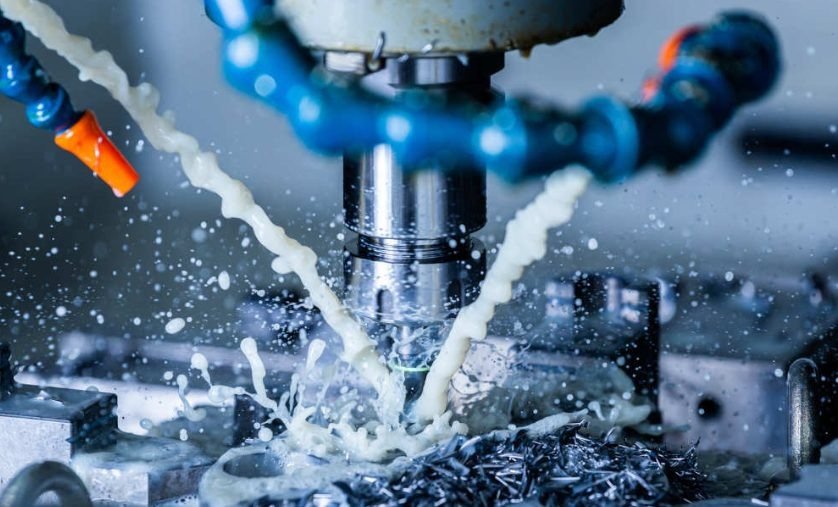
For CNC milling, setup is typically more involved. The workpiece fixture or vice needs to be aligned and clamped accurately. Each cutting tool needs to be loaded, measured, and offset-registered in the control. The datum point needs to be set so the machine knows exactly where the part is in the working envelope.
On a modern CNC machining shop with a 20-station automatic tool changer, like the XYZ 750-LR VMC used at Ashland Engineering, much of this tool management is handled automatically once the initial setup is done. The machine calls the right tool for each operation without manual intervention, which keeps cycle times consistent across the batch.
Stage Three: First-Off Inspection
Before the full batch runs, the first completed part goes through a thorough dimensional inspection. This is called the first-off or first article inspection, and it is a standard step in any well-run CNC machining shop.
The first-off inspection checks every critical dimension on the drawing against the actual machined part. If everything falls within tolerance, the batch proceeds. If anything is out, the setup is adjusted and a second trial part is made before the run continues.
This step protects both the machining shop and the customer. Catching a setup error on the first part costs a few minutes. Discovering the same error across a completed batch costs significantly more.
For customers supplying parts into regulated industries or quality-critical assemblies, the first-off inspection record provides documentary evidence that the production run started from a conforming baseline.
Stage Four: The Production Run
Once the first-off passes inspection, the batch runs. On a well-set-up CNC machining shop, the production run is largely automated. The operator loads raw material, monitors the process, carries out periodic in-process checks, and removes finished parts.
Modern CNC lathes and machining centres hold their accuracy throughout a batch run because the program, tooling, and fixturing remain constant. Part-to-part variation comes primarily from material consistency, tool wear, and thermal effects in the machine. All three are manageable in a controlled production environment.
Periodic in-process inspection checks that dimensions are holding throughout the run. This is particularly important for longer batches, where gradual tool wear can cause dimensions to drift toward the tolerance limit over time. A skilled machinist monitors this and adjusts tool offsets proactively to keep the process centred.
Stage Five: Final Inspection and Quality Records
When the batch completes, finished parts go through final inspection before they leave the shop. The extent of this inspection depends on the drawing requirements and the quality management framework in place.
In an ISO 9001 certified CNC machining shop, final inspection is documented. The inspection record captures which dimensions were checked, the results, the measuring equipment used, and the inspector’s sign-off. This record travels with the batch and provides traceability back to the production run.
For customers who supply into aerospace, automotive, medical, or other regulated sectors, this documentation is not optional. It is a supply chain requirement. Even outside regulated sectors, inspection records give you confidence that what you specified is what you received.
Stage Six: Surface Finishing and Despatch
Many CNC machined parts require surface finishing before they are ready for use or assembly. Deburring removes sharp edges left by the machining process. Some parts require additional treatments such as anodising, powder coating, plating, or heat treatment.
A CNC machining shop that handles surface finishing in-house, or has established relationships with local finishing suppliers, can manage this as part of the overall supply. That saves the customer from coordinating between multiple suppliers and reduces the risk of parts being damaged in transit between processes.
Once finishing is complete, parts are inspected again, packaged to prevent damage in transit, and despatched.
Why Repeat Batches Cost Less
When you place a repeat order at a CNC machining shop for a part you have ordered before, the setup time is significantly reduced. The program already exists. The tooling offsets may be on record. The fixturing solution is known. The first-off inspection is faster because the process is proven.
This is why the unit cost on a second or third batch is typically lower than the first. The non-recurring engineering work has already been paid for.
For customers with ongoing demand, this makes sub-contract batch production an increasingly efficient supply model over time. The relationship builds, the process matures, and the shop gets faster and more confident with each successive run.
Batch Production at Ashland Engineering
At Ashland Engineering in Milton Keynes, batch production CNC machining runs on modern equipment including the XYZ Pro-Turn RLX1630 CNC lathe and the XYZ 750-LR VMC vertical machining centre. Both machines operate under a fully documented ISO 9001 quality management system, with first-off inspection, in-process checks, and final inspection records on every batch.
Customers across Buckinghamshire, Northamptonshire, Bedfordshire, and the wider UK use Ashland for repeat batch supply of turned and milled components in mild steel, stainless steel, aluminium, and other materials. Whether you need five parts or five hundred, the same quality framework applies.
To discuss your batch production requirements, contact the team at sales@ashlandengineering.co.uk or call 01908 382 599.