Understanding metal fabrication cost in the UK helps you budget accurately and choose the right supplier. This guide breaks down what drives pricing and what to expect when you request a quote.
If you have ever requested a quote for metal fabrication and wondered why two suppliers gave you completely different prices for the same job, you are not alone. Metal fabrication cost in the UK varies significantly depending on a range of factors that are not always obvious from the outside.
This guide explains what drives fabrication pricing, what realistic cost ranges look like, and how to get accurate quotes without wasting time on both sides.
Why Metal Fabrication Cost Is Hard to Generalise
Unlike buying a product off a shelf, custom metal fabrication is priced job by job. There is no standard price list. Every project has different geometry, different material requirements, different processes involved, and different quantities.
That said, understanding the main cost drivers gives you a realistic framework before you approach a fabricator. It also helps you spot quotes that are too low to be credible and too high to be competitive.
The Main Factors That Drive Metal Fabrication Cost
Material Type and Grade
Material is often the largest single cost in a fabrication job. The type and grade you specify directly affects the price.
Mild steel is the most affordable option. It machines, cuts, and welds well, and it is widely available. If your application does not require corrosion resistance or high strength-to-weight ratio, mild steel is usually the most cost-effective choice.
Stainless steel costs significantly more than mild steel, typically two to four times the material cost depending on grade. Grade 304 is the more affordable stainless option. Grade 316, which offers better corrosion resistance in marine and chemical environments, costs more again.
Aluminium sits between mild steel and stainless in cost terms. It is lighter, which can reduce downstream handling and transport costs, but the material price is higher than mild steel and it requires more care during welding.
Copper and specialist alloys carry a substantial premium and are quoted separately based on current market prices.
Material Thickness and Weight
Heavier gauge material costs more to buy and more to process. Thick plate requires more powerful cutting equipment, slower feed rates, and more time per metre of cut. It also takes longer to form and weld.
Sheet metal up to 6mm is generally faster and cheaper to process than plate above that threshold. If your design allows for thinner material without compromising strength, that is worth considering at the drawing stage.
Cutting Process
Laser cutting is the standard for sheet metal work. It is fast, accurate, and produces a clean edge with minimal waste. For most sheet metal components, laser cutting is included in the fabrication price rather than quoted separately.
Profile cutting using plasma or oxy-fuel is used for thicker plate. It is slower than laser cutting and may require additional edge finishing. On heavy structural work, profile cutting costs more per metre than laser cutting.
Forming and Bending
Press brake bending adds cost based on the number of bends, the material thickness, and the complexity of the bend sequence. Simple parts with one or two bends are inexpensive to form. Complex enclosures with many bends on multiple faces take significantly more time and skilled setup.
Welding
Welding is one of the most time-intensive elements of fabrication and therefore one of the biggest contributors to metal fabrication cost. The process used matters a great deal here.
MIG welding is faster and suits most structural and general fabrication work. TIG welding produces a superior finish but takes considerably longer. If your job requires TIG welding throughout, expect the welding line in the quote to be higher.
Weld length and accessibility also affect cost. Short, accessible welds are fast to complete. Long continuous welds or welds in tight, awkward positions take more time and skill.
Surface Finishing
Raw fabricated steel is rarely the finished state. Most jobs require some form of surface treatment.
Powder coating is the most common finish for mild steel. The cost depends on the colour, surface area, and whether the part needs priming first. Standard colours cost less than RAL specials or textured finishes.
Hot-dip galvanising suits structural and outdoor work. It is priced by weight and involves an external process, which adds lead time as well as cost.
Anodising applies to aluminium and is priced by surface area and colour. Clear anodising is cheaper than colour options.
Electroplating costs vary significantly depending on the plating material and the specification required.
Quantity
Batch size has a significant effect on unit cost. A one-off prototype carries the full setup cost on a single part. A batch of fifty parts spreads that setup cost, reducing the price per unit considerably.
For repeat orders, a fabricator who already has the job set up and a reference sample on file can often turn around subsequent batches faster and at a lower unit cost than the first run.
Complexity and Tolerances
Tight tolerances cost more to achieve and verify. A part with critical dimensions that require CMM inspection or go/no-go gauging adds inspection time to the job cost.
Complex assemblies with many components, sub-assemblies, or multiple processes running in sequence take more time to plan and manage. This is reflected in the price.
What Are Realistic Metal Fabrication Cost Ranges in the UK?
These figures are indicative only. Every job is different, and your fabricator will price based on your specific drawings and requirements.
Simple laser cut and folded brackets in mild steel: from around £15 to £60 per part depending on size and quantity.
Sheet metal enclosures with multiple bends and welds: typically £80 to £400 per unit for one-off or small batch work, depending on size and complexity.
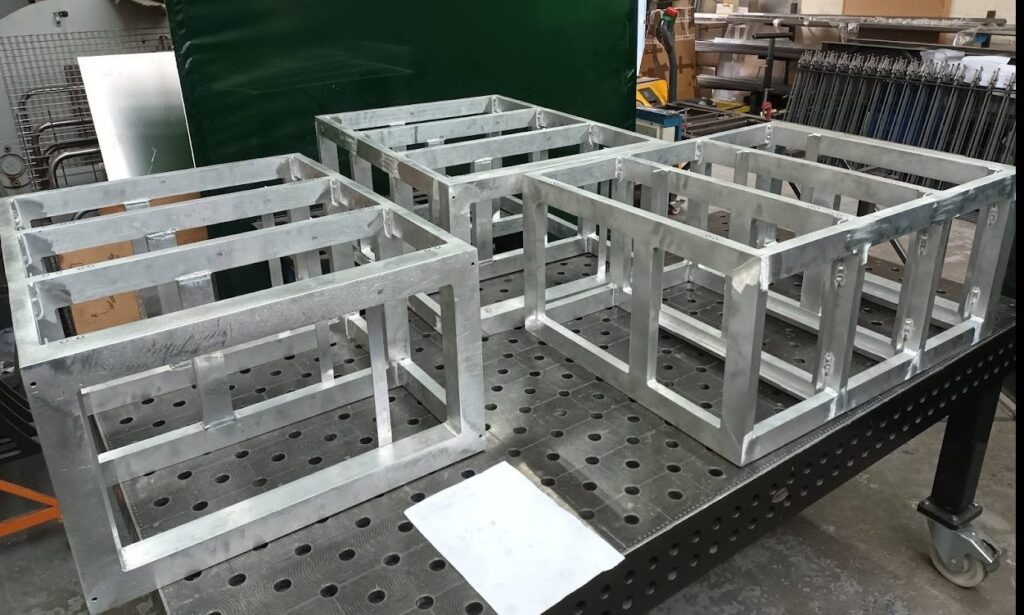
Welded mild steel frames and structural assemblies: highly variable, but expect £150 to £800 for small to medium assemblies.
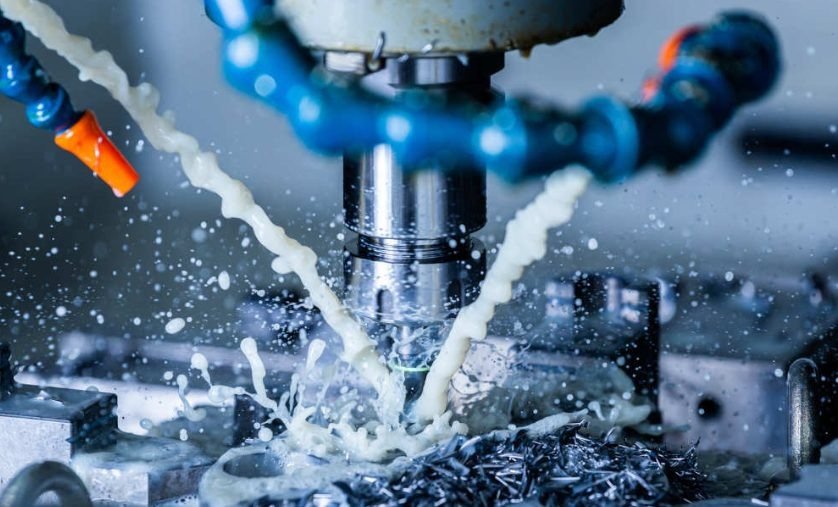
CNC machined components: typically £40 to £300 per part for turned or milled parts in steel or aluminium, depending on complexity and tolerances.
Surface finishing adds cost on top of fabrication. Powder coating a medium-sized enclosure typically adds £30 to £80 per part.
How to Get an Accurate Quote
The clearest way to get an accurate metal fabrication cost is to provide complete information upfront. That means a fully dimensioned drawing or CAD file, a clear material specification including grade and thickness, the quantity you need, any surface finish requirements, and your required delivery date.
Incomplete enquiries lead to estimated quotes with wide contingency margins built in. A complete drawing pack gives the fabricator everything needed to price accurately and reduces the risk of surprises when the job comes in.
It is also worth asking whether the fabricator will flag any design issues before they quote. A good fabricator who spots a problem early saves you money. One who just prices what is on the drawing and makes it regardless costs you more in the long run.
Working with Ashland Engineering
At Ashland Engineering in Milton Keynes, every enquiry is reviewed properly before a quote goes out. The team checks drawings for any issues that might affect cost or quality, and they will flag these before production starts rather than after.
Ashland works with customers across Buckinghamshire, Northamptonshire, Bedfordshire, and the wider UK on everything from single prototypes to ongoing batch production supply. ISO 9001 certification means quality is managed at every stage, so the price you pay reflects consistent, documented work rather than variable results.
To get an accurate quote for your project, contact the team at sales@ashlandengineering.co.uk or call 01908 382 599. Supply your drawings and requirements, and the team will come back with a clear, detailed price.