Sourcing sub-contract CNC machining for your manufacturing operation? This guide helps UK operations managers and procurement directors find a reliable precision machining partner, covering ISO 9001, material traceability, repeatability, and supply chain resilience.
If your business relies on precision machined components, your sub-contract CNC machining partner is one of the most critical suppliers in your entire operation.
Get the choice right and you gain a dependable extension of your own production capability. Get it wrong and you face missed deadlines, inconsistent quality, and the kind of supply chain disruption that cascades through your production schedule.
This guide gives operations managers and procurement directors exactly what they need to assess, select, and onboard a reliable sub-contract CNC machining partner in the UK.
Why UK Manufacturers Outsource CNC Machining
Sub-contract CNC machining is not a compromise. For most manufacturers, it is a deliberate and commercially sound strategy.
Outsourcing allows manufacturers to ramp up quickly for a programme launch or seasonal demand without purchasing new machines or hiring operators, tackle multi-axis work or tight tolerances using a partner that does this every day, and split work across internal and external capacity to compress schedules and reduce single-point risk.
Furthermore, a right-sized sub-contract partner often delivers more cost-effectively than carrying idle in-house capacity. Especially at low to mid volumes, the economics of outsourcing precision machining to a specialist simply make sense.
However, the quality of the partner determines whether this strategy delivers its promised benefits. The following criteria separate reliable partners from risky ones.
1. ISO 9001 Certification: The Non-Negotiable Starting Point
The first question to ask any sub-contract CNC machining supplier is straightforward. Are you ISO 9001 certified?
ISO 9001 certification mandates a Quality Management System that ensures consistency and mitigates risk. It enforces strict process controls, material traceability, and regular equipment calibration, which directly translates to reliable dimensional accuracy, stable tolerances, and repeatable quality for every part produced.
Without ISO 9001, a supplier operates without a structured, audited quality framework. That means their consistency depends on individual effort and goodwill rather than documented, controlled processes. For manufacturers who need to rely on a sub-contract partner across multiple batches and extended programmes, this is an unacceptable risk.
ISO 9001 emphasises traceability, inspection protocols, and part lifecycle management, helping manufacturers maintain consistent performance and reliability across every component produced.
Ask to see the certificate. Check it is current and that its scope explicitly covers CNC machining or precision engineering. A credible partner shares this without hesitation.
Ashland Engineering holds full ISO 9001 certification to the latest standard. Their quality management system covers every stage of production, from drawing review and material sourcing through to in-process inspection and final delivery.
2. Material Traceability: Protecting Your Supply Chain
Material traceability is one of the most important and most frequently overlooked criteria when selecting a sub-contract CNC machining partner.
A critical requirement of the ISO 9001 standard is traceability. A certified shop must track the journey of raw materials from the moment they arrive at the facility to the final part shipped to the customer. This is a crucial safeguard because it ensures the mechanical properties and chemical composition of parts are exactly what was specified, every single time.
For manufacturers supplying into regulated industries or maintaining their own quality management systems, material traceability is not optional. You need documented proof that the metal in your parts is exactly what the drawing specifies.
Quality should start before material is ordered, with careful review of drawings, tolerances, specifications, and customer requirements. The supplier should identify risks early, clarify ambiguities, and confirm that inspection methods are suitable for the component.
Ask your prospective partner directly. Can they provide material certificates for every batch? Do they source materials from approved suppliers with documented traceability? How do they handle a situation where material certification cannot be confirmed?
Ashland Engineering maintains strict material traceability throughout their machining process. Their supply chain and inspection protocols ensure that every component ships with the correct material documentation, giving customers full confidence in the parts they receive.
3. Repeatability Across Batch Production
Consistency across repeat orders is where many sub-contract CNC machining suppliers fall short. The first batch may be perfect. However, subsequent batches can show variation that causes assembly problems, increased scrap rates, and warranty claims.
A true CNC machining partner understands your industry’s standards and tolerances and delivers every batch, every component, to the same specification. In-process inspection, coordinate measuring machines, and material traceability are the hallmarks of a supplier who takes repeatability seriously.
Repeatability depends on three things: controlled CNC programmes, stable fixturing, and consistent inspection throughout production.
A machinist who reprogrammes from scratch each time, uses inconsistent workholding, or only inspects finished parts at the end of a batch introduces variation that accumulates across repeat orders.
A strong sub-contract CNC machining partner quotes realistic tolerances and hits them. Dimensional tolerances of ±0.01mm are routine on many features, with tighter tolerances achievable on critical dimensions with proper process control. TÜV Rheinland
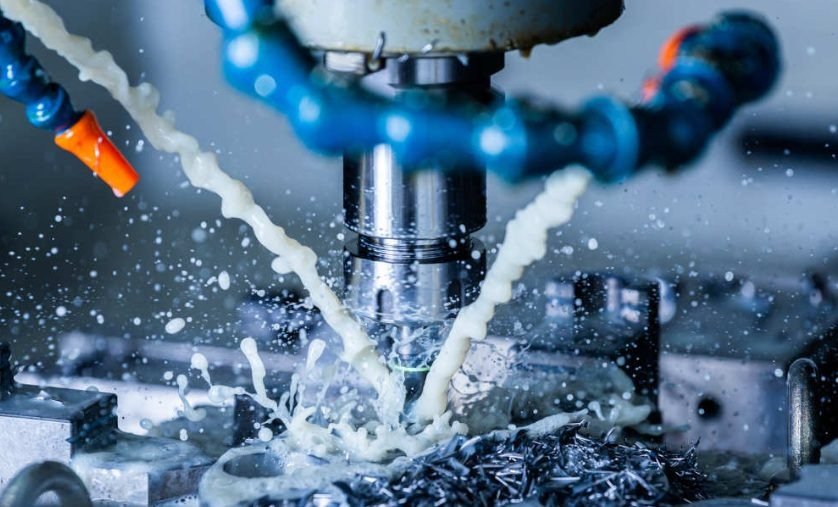
Ashland Engineering invested in a dedicated, segregated CNC machine shop in 2023. Their XYZ Pro-Turn RLX1630 CNC Lathe and XYZ 750-LR Vertical Machining Centre run proven CAM programmes directly from approved CAD models. Custom fixturing locks in accuracy from the first part of a batch to the last. Furthermore, their calibrated digital metrology tools verify critical dimensions at key stages rather than just at final inspection.
4. Design for Manufacture Support
The best sub-contract CNC machining partners do not simply manufacture to your drawings. They actively help you improve those drawings before production starts.
A mature quality management system requires a thorough contract and design review before a single chip is cut. This is the first and best opportunity to leverage a supplier’s expertise to identify design risks, manufacturing challenges, and opportunities to reduce cost without compromising function.
Design for Manufacture, or DFM, is the process of reviewing a component design for producibility. A skilled machinist identifies features that are difficult or impossible to machine accurately, tolerances that are tighter than the application requires, material choices that complicate machining unnecessarily, and opportunities to reduce operations and therefore cost.
A good partner offers DFM support to help refine part designs, reduce cost, and improve performance. They will recommend adjustments to non-functional tolerances, material specifications, or feature geometry that improve machinability without compromising the component’s intended function.
Ashland Engineering’s in-house CAD/CAM engineering design team provides full DFM support as a standard part of their sub-contract machining service. They work directly from customer-supplied STEP files, DXF files, PDF drawings, or even early-stage sketches. They review each design before quoting, flag potential issues, and propose solutions that improve both quality and cost efficiency before the first cut is made.
5. Scalability: Prototype to Batch Without Tolerance Drift
Your production volumes will change. A new product launches with a small prototype run, then scales to batch production, and eventually moves to scheduled repeat deliveries. Your sub-contract CNC machining partner must follow that journey without compromising the accuracy established at the prototype stage.
Choose a partner that can scale production from small batch runs to large-volume manufacturing without compromising quality. The right partner uses advanced CNC machines and skilled operators to ensure sub-contract manufacturing runs efficiently even when demand spikes.
This scalability requires more than just available machine capacity. It requires the same CAM programmes, the same fixturing, and the same inspection protocols at every volume. Without these elements, tolerance drift creeps in as volume increases.
Ashland Engineering explicitly manages this transition for OEM customers. Their advanced CNC capabilities and precision workholding allow them to move from approved prototype to reliable batch production without tolerance drift. The same digital model that proved the prototype drives every subsequent production batch.
6. Quality Documentation Your Business Can Use
Operations managers and procurement directors need more than good parts. They need the documentation to demonstrate that those parts meet specification to their own customers, auditors, and quality management systems.
A reliable sub-contract CNC machining supplier should have a structured approach to inspection from contract review through to final release, with calibrated equipment, trained inspectors, and clear procedures for recording and communicating results.
Ask prospective partners what documentation they provide as standard and what they can provide on request. Certificates of conformity confirm that a batch meets your specified requirements. Material certificates trace the exact grade and source of every metal used. Dimensional inspection reports document the measured values of critical features against drawing requirements.
Inspection facilities including CMMs, surface testers, and comprehensive documentation are essential for high-value sectors and for manufacturers who maintain their own quality management systems.
Ashland Engineering supplies quality documentation in line with customer requirements. Their ISO 9001 certified system generates traceable records at every stage of production, which means documentation is available and accurate rather than assembled retrospectively when a customer asks for it.
7. Communication and Lead Time Reliability
The final criterion is often the deciding one in long-term sub-contract relationships. A supplier who machines good parts but communicates poorly creates almost as many problems as one who machines bad parts.
Signs that it is time to look for a better CNC machining supplier include missed deadlines, poor communication, and inconsistent part quality. A great supplier responds quickly, offers regular updates, and welcomes audits and site visits as a demonstration of transparency.
Reliable communication means honest lead time estimates, not optimistic ones. It means proactive updates when something changes rather than waiting for a customer to chase. And it means a team that engages technically on your project rather than treating every enquiry as a transaction.
Ashland Engineering monitors enquiries constantly and responds promptly. For complex or time-critical projects, direct phone contact is available and the team engages immediately with programme requirements. They welcome customer visits and are fully transparent about their processes, equipment, and quality system.
Choosing the Right Sub-Contract CNC Machining Partner
Evaluate every prospective partner against these seven criteria. A reliable sub-contract CNC machining supplier answers every question clearly, provides documentation without being asked twice, and backs every claim with verifiable evidence.
Ashland Engineering meets all seven criteria. Based in Milton Keynes and serving manufacturers across the UK, they combine ISO 9001 certified quality, full in-house CNC turning and milling capability, strict material traceability, in-house CAD/CAM design, and a proven track record of delivering precision machined components to OEM customers on time and to specification.
Every service is governed by strict ISO 9001 certified processes, and their CNC machining department routinely processes specialised, high-conductivity materials like copper alongside standard carbon steels and specific alloy grades for machined components, with strict material traceability throughout.
Ready to Discuss Your Sub-Contract CNC Machining Requirements?
Get in touch with Ashland Engineering today. Send your drawings, STEP files, or project requirements to sales@ashlandengineering.co.uk or call 01908 382 599 to discuss your precision machining needs and receive a competitive, detailed quote.